On an older car, swapping a battery used to take ten minutes and one spanner, and plenty of drivers still do it themselves. Modern cars add a few steps, and a mistake can cost more than the battery. Here is what is involved, so you can decide which route suits you.
First, is it really the battery?
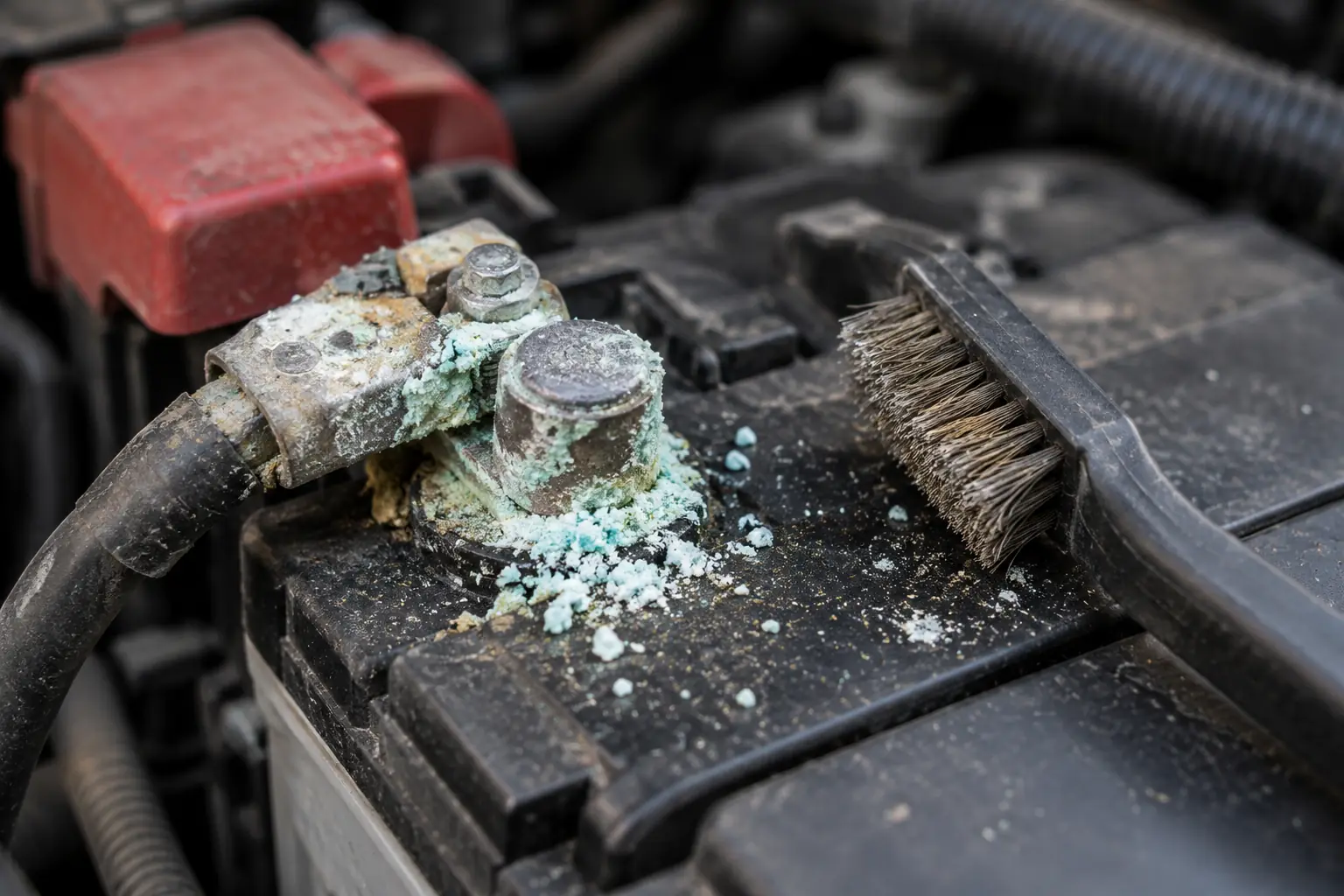
Check before you buy anything. If the engine turns over at a normal speed but will not fire, the battery is probably fine. If the dashboard lights are bright but nothing happens when you turn the key, the starter or a connection may be at fault. A loose or corroded clamp can mimic a flat battery and costs nothing to clean. And if the car starts after a jump start but is dead again the next morning, the battery is no longer holding charge or something is draining it overnight.
Safety comes first
A car battery holds sulphuric acid and can give off hydrogen gas, which is flammable. Wear gloves and eye protection, keep flames and sparks away, and never let a metal tool touch both terminals at once. If the case is cracked, swollen or leaking, leave it where it is and ask for help.
The basic order of work
- Switch everything off and take the key or key card away from the car.
- Disconnect the negative terminal first, then the positive.
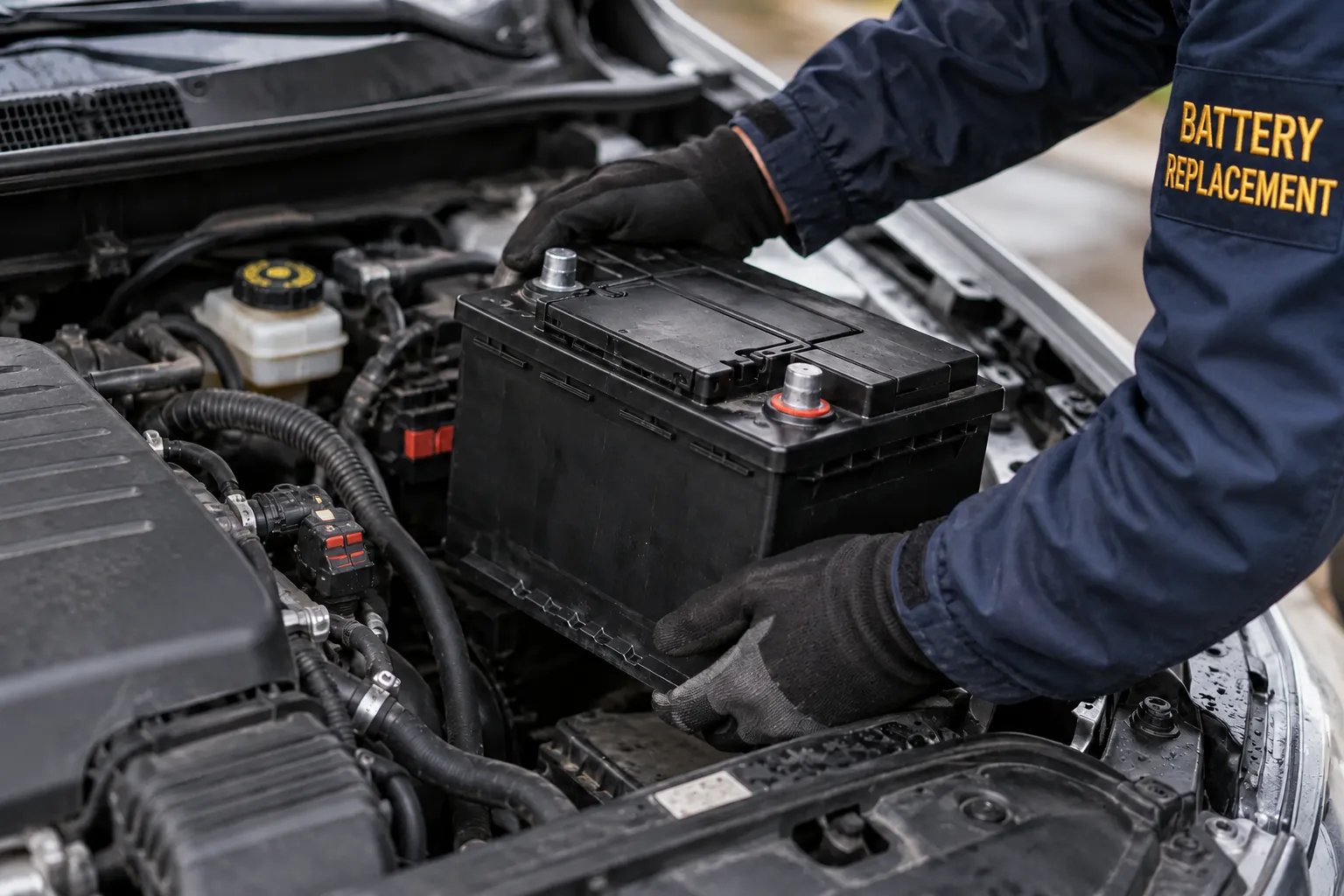
- Undo the clamp and lift the battery straight out. Batteries are heavier than they look, so bend your knees.
- Clean the tray and the cable clamps, then fit and secure the new battery.
- Connect the positive first, then the negative, and tighten both.
Working in that order means a spanner that slips on the positive terminal cannot short against the body of the car.
Where modern cars make it harder
- Location. In many cars the battery sits under the boot floor, under a seat or behind trim in the engine bay.
- Registration. Cars with start-stop, including many German makes, expect a new battery to be registered with the car’s computer. Without that step the car may keep charging as if the old battery were still fitted, which can shorten the new one’s life.
- Settings. Window positions, radio presets and sometimes a radio security code may need resetting. Some fitters connect a memory saver to keep the car powered during the change.
- The right battery. An EFB or AGM car needs the same type again, in the right size and rating.
When having it fitted makes sense
If the car has start-stop, if the battery is tucked away, if you are not sure the battery is really the fault, or if you would rather not wrestle a heavy battery out in the rain, a fitted replacement is the easier option. Changing one on a wet driveway on a November evening is a very different job from doing it in a dry garage in June. Testing the battery and the charging first also saves buying a battery the car did not need, because a starter motor or alternator fault can look the same from the driver’s seat.
The old battery
An old car battery must never go in the household bin. Battery sellers, garages and most civic amenity sites accept them for recycling. If we fit your new one, ask on the phone whether taking the old battery away is included.
Having it done in Dublin or Meath
We supply and fit batteries at homes, workplaces and car parks across Dublin and Meath, for a €150 call-out plus the battery. Read about our car battery replacement in Dublin, or ring 085 783 9202 with the registration and we will confirm the battery and the full fitted price before we come out.