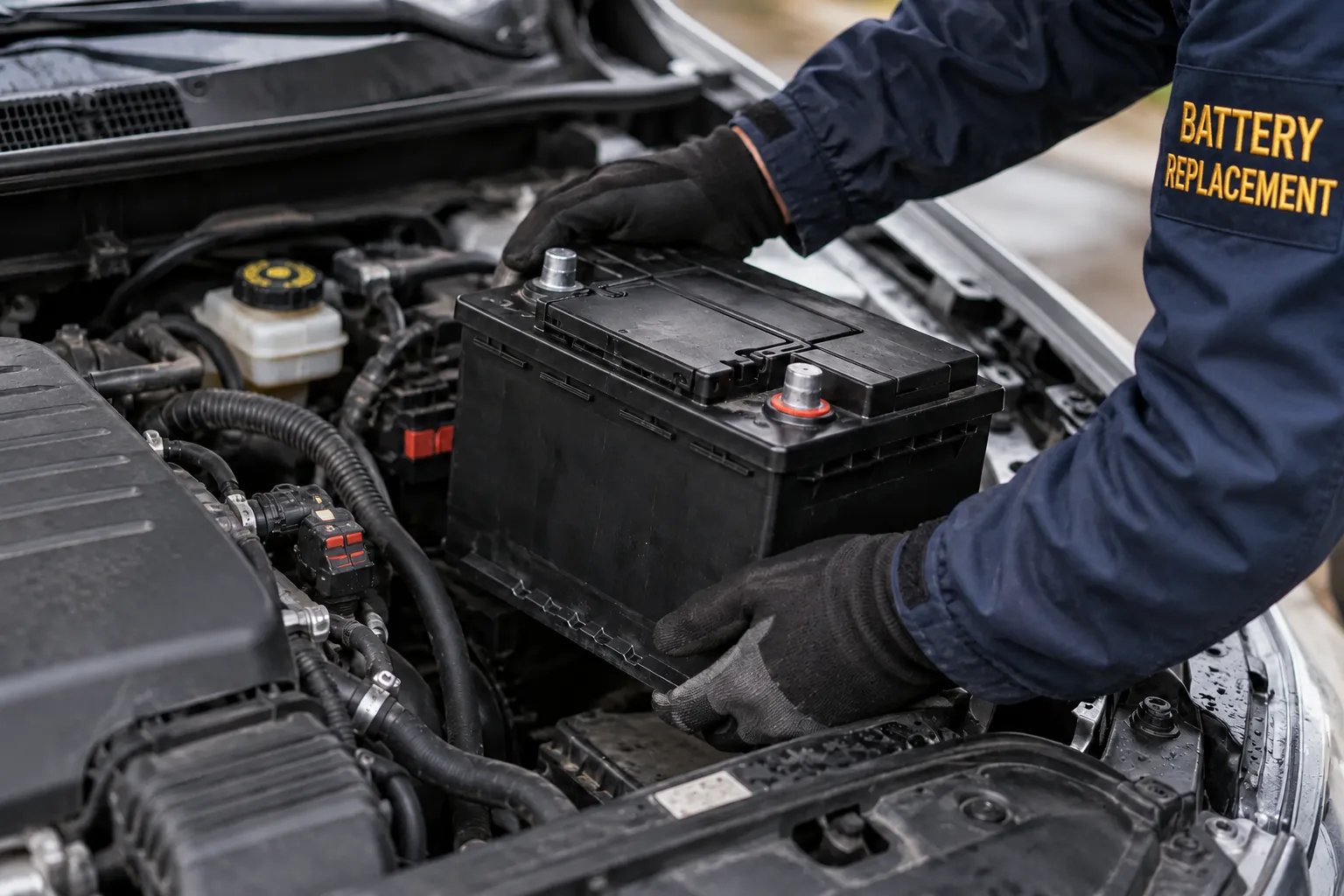
If your car switches the engine off at traffic lights and starts it again when you lift your foot off the brake, it has a start-stop system. That system asks far more of the battery, and an ordinary battery is not always up to it.
What makes a start-stop battery different
An ordinary battery starts the engine and runs the electrics. In a start-stop car the battery restarts the engine many times on every journey, and keeps the lights, screens and fan running while the engine is off. It has to cope with far more cycles of discharge and recharge.
Two types are common:
- EFB (enhanced flooded battery): built for cars with a basic start-stop system.
- AGM (absorbent glass mat): built for more demanding systems, such as cars that recover energy when braking. It usually costs more and lasts longer in the right car.
Why the right type matters
An ordinary battery fitted to a car that needs EFB or AGM can wear out early, and the start-stop system may stop working because it relies on the battery reporting its condition. Fitting a different type from the one the car was built for is often a false saving.
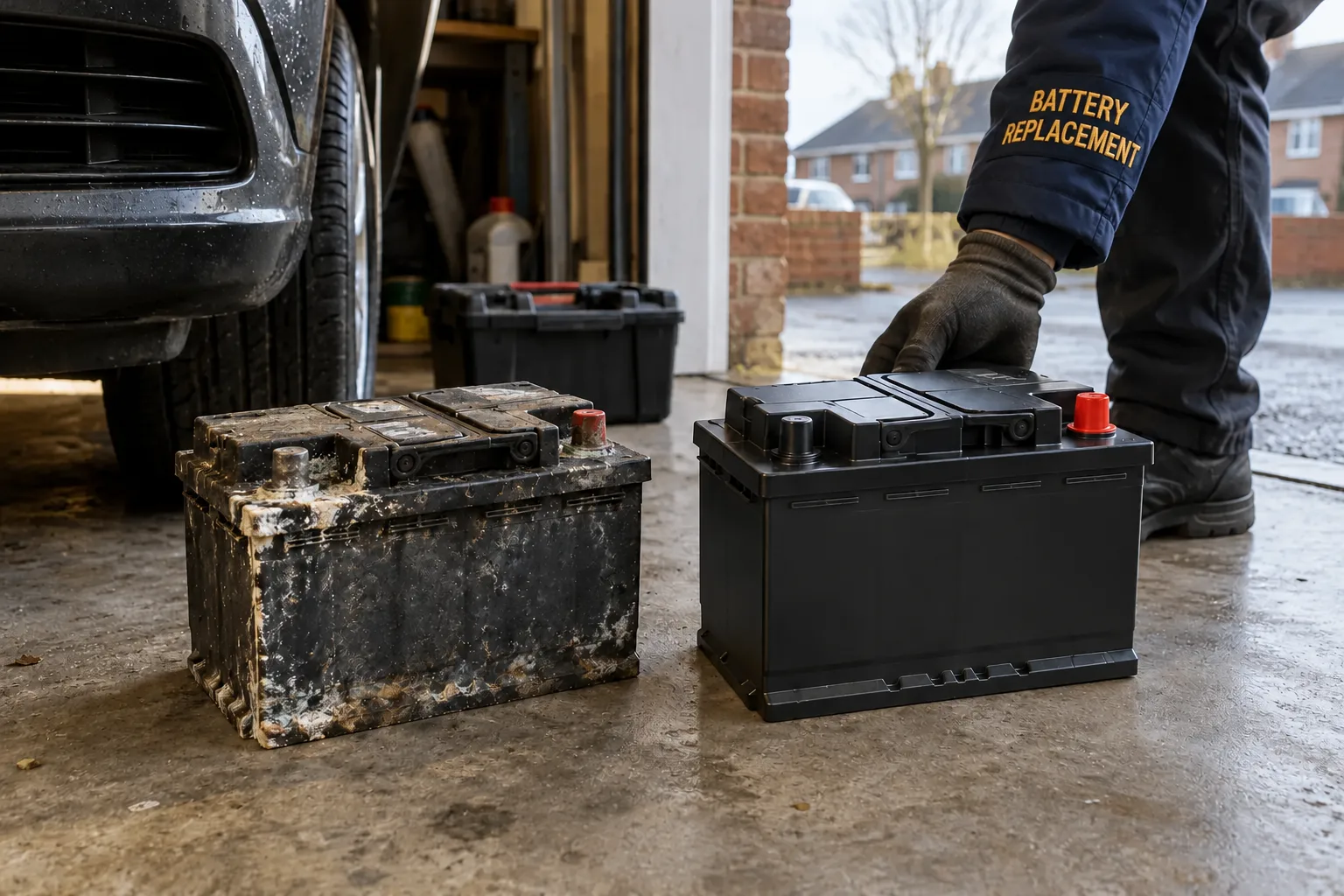
Does a new battery need to be registered?
Some cars need the new battery registered with the car’s computer after fitting, so the charging system knows its type and age. Skip it and the car may charge the new battery wrongly and shorten its life. Not every car needs this: it depends on the make and model.
How to tell what your car needs
The label on the current battery usually says EFB or AGM, and the handbook lists the specification. The quickest way is to give us the make, model and year when you call about an AGM or EFB battery replacement in Dublin or Meath.
Signs a start-stop battery is tired
Slow starting, dim lights, a start-stop system that has stopped switching the engine off, or a battery more than four years old. Any of these is a good reason to have it checked.
The old battery
An old battery should always go for recycling. Ask when you book whether taking it away is included in the price.